Hydroponic Companion Planting 101
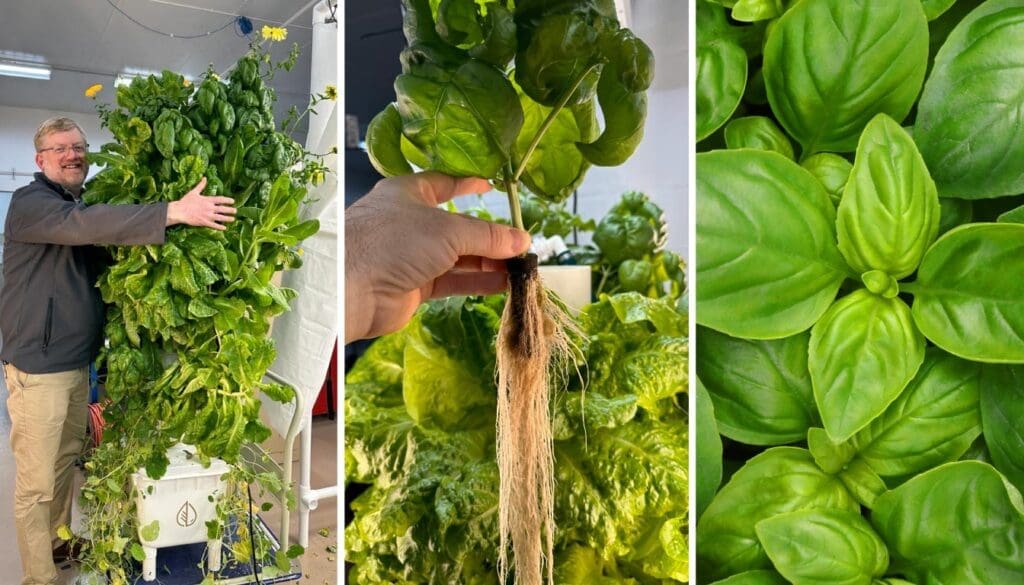
Companion planting has been used in traditional gardening for centuries, but its benefits can also be applied to modern hydroponic systems like vertical hydroponic gardening systems. By carefully pairing plants that naturally support one another, growers can create a healthier and more productive growing environment while reducing common issues such as pests, overcrowding, and uneven plant growth. In a vertical hydroponic setup where every planting location matters, understanding how different crops interact can dramatically improve overall performance.
Â
This guide is designed to help growers make smarter planting decisions inside their tower systems by explaining not only which plants pair well together, but also why placement matters. From fast-growing leafy greens and aromatic herbs to larger fruiting crops like tomatoes and peppers, each plant has unique root structures, light needs, and growth habits that can impact the entire tower ecosystem. Learning how to balance these factors can help improve airflow, maintain healthy water circulation, reduce maintenance, and increase yields throughout the growing season.
Â
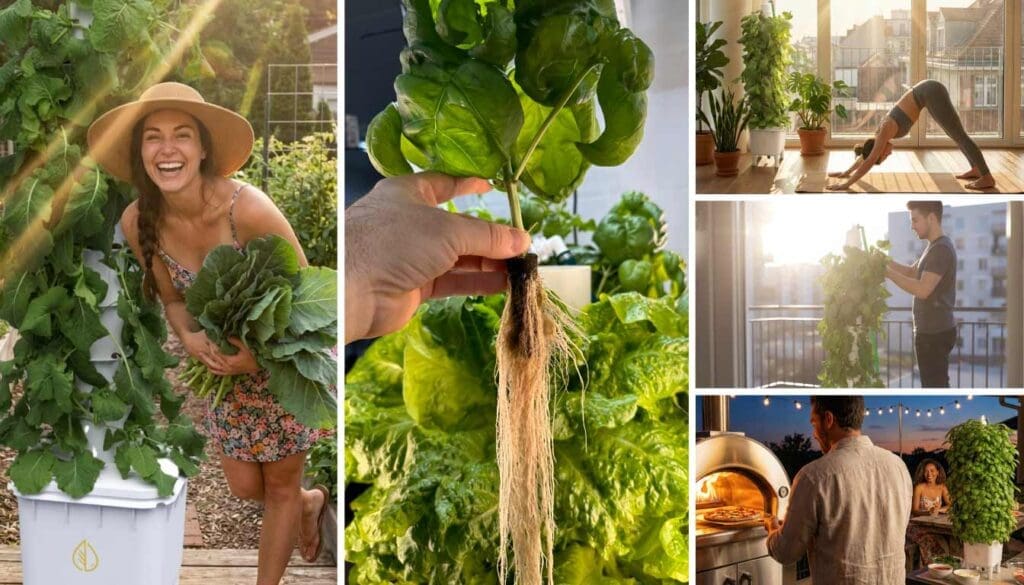
Whether you're growing indoors year-round or building a productive patio garden, companion planting offers a more natural and efficient approach to hydroponic gardening. By combining the right plants in the right places, growers can encourage stronger growth, improve plant resilience, and create a thriving vertical garden that works together as a complete living system.
Lettuce, Tomatoes, & Herbs - Hydroponic Companion Planting
Lettuce:
Lettuce is a fantastic, fast-growing staple that pairs perfectly with herbs like basil, dill, and mint, which help
mask the greens from common pests like aphids. Because lettuce has relatively shallow root systems and
thrives in cooler conditions, it is best placed at the **top to middle** of the tower. Placing it here ensures
its smaller roots won't clog the upper water distribution, and if placed just below larger plants, it can benefit
from partial shade to prevent it from bolting (going to seed) too early in warm grow rooms.
Â
Tomatoes (Compact/Cherry):
Tomatoes benefit immensely from being planted near basil, which is known to naturally deter spider mites
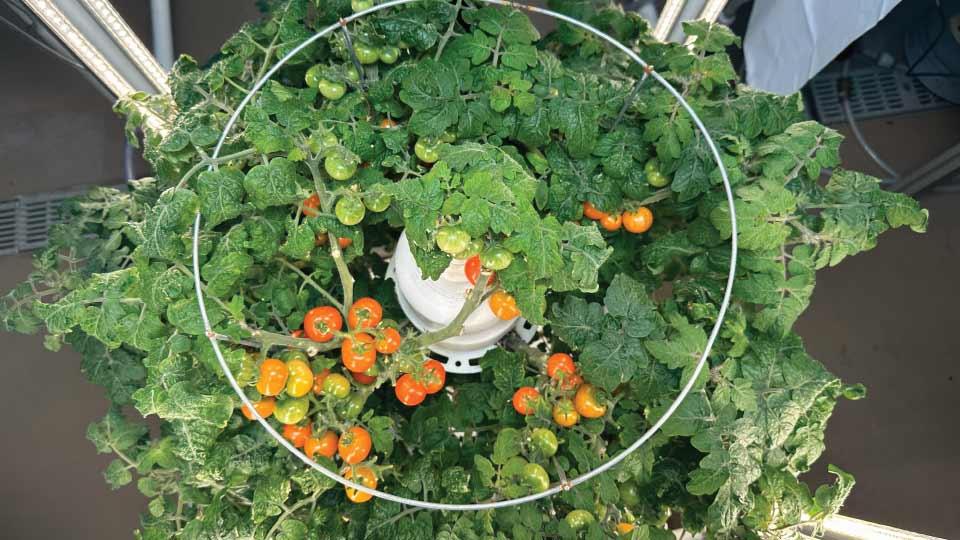
and whiteflies while supposedly enhancing the tomatoes' flavor. Marigolds and nasturtiums act as excellent pest-deterring neighbors as well. Tomatoes should strictly be placed at the **bottom** of the tower.
They develop massive, thirsty root systems that can easily clog water flow to lower plants if placed too
high, and their heavy, fruiting branches need the structural support of the lower base or an external light
cage to prevent the tower from becoming top-heavy.
Â
Herbs (Basil, Mint, Cilantro):
Aromatic herbs are the ultimate hydroponic guardians; their strong essential oils confuse and deter pests,
creating a protective bubble for more vulnerable plants like lettuce and strawberries nearby. These should
generally be placed at the **top to middle** of the tower. This allows them to receive plenty of light to develop their crucial oils. *Note: Mint has highly aggressive runners and roots, so keeping it in the upper tiers
prevents it from strangling the root zones of plants below it.*
Peppers, Strawberries, Cucumbers
Peppers (Compact/Chili):
Like tomatoes, peppers share similar higher-nutrient requirements and benefit greatly from pest-masking
companions like basil, nasturtiums, and marigolds to keep aphids away. Leafy greens like Swiss chard
make good space-filling neighbors that won't compete for the same canopy light. Peppers are best suited
for the **middle to bottom** tiers. They grow into sturdy, bushy plants that can cast shade, and their larger
root masses are better accommodated lower down where they won't restrict the internal plumbing.
Strawberries:
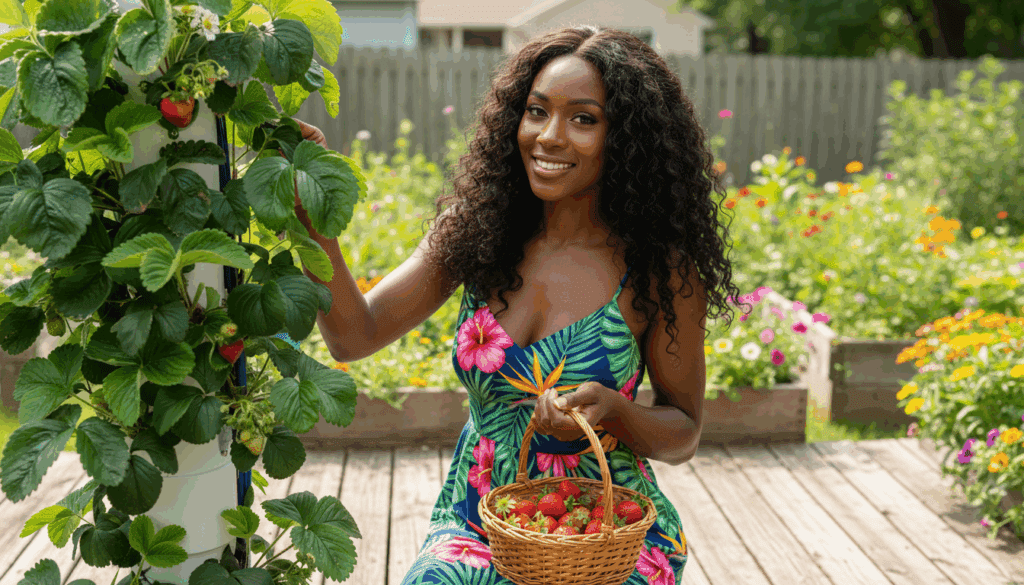
Strawberries thrive alongside leafy greens like lettuce and spinach, which share a similar nutrient preference, while thyme helps keep pests at bay. Borage is also a classic companion that attracts vital pollinators if your tower is located outdoors or in a greenhouse. Strawberries are uniquely suited for the **top to
middle** tiers. Placing them higher up keeps their delicate dangling fruit away from the moisture splashing
near the bottom reservoir (preventing rot) and ensures they get the unobstructed light needed to ripen
sweet berries.
Cucumbers (Bush Variety):
Even compact bush cucumbers are heavy feeders that pair exceptionally well with legumes like bush beans
and peas. Aromatic companions like dill and nasturtiums are highly recommended to deter cucumber beetles and aphids. Cucumbers absolutely belong at the **very bottom** of the tower. They have extensive root
systems and long, sprawling vines; planting them at the base allows their heavy vines to safely cascade
down over the reservoir or be trained up an external trellis without suffocating the rest of your tower.
Cucumbers, Kale & Swiss Chard, Bush Beans
Cucumbers (Bush Variety):
Even compact bush cucumbers are heavy feeders that pair exceptionally well with legumes like bush beans
and peas. Aromatic companions like dill and nasturtiums are highly recommended to deter cucumber beetles and aphids. Cucumbers absolutely belong at the **very bottom** of the tower. They have extensive root
systems and long, sprawling vines; planting them at the base allows their heavy vines to safely cascade
down over the reservoir or be trained up an external trellis without suffocating the rest of your tower.
Kale & Swiss Chard:
These hardy, large-leafed greens share similar vegetative nutrient needs with herbs and beans. Pairing
them with strong-smelling herbs like mint, dill, sage, and rosemary provides a natural defense against
common leaf-eating pests like caterpillars and aphids. Because kale and chard produce wide, umbrella-like
leaves as they mature, they should be placed in the **middle to bottom** tiers. If placed too high, their massive leaves will completely block the light from reaching the smaller plants below them.
Bush Beans:
Bush beans are relatively compact, fast-growing producers that share a happy neighborhood with cucumbers, strawberries, and celery. Summer savory is a traditional companion herb that naturally deters bean
beetles and is said to encourage strong growth. Bush beans should be planted in the **middle to bottom**
sections of the tower. They tend to bush outward significantly, so placing them lower gives them the lateral
room they need to expand without overshadowing delicate herbs and greens placed higher up.
Final Thoughts!
Companion planting within a Hydra Tower system is more than just organizing plants by size or appearance, it's about creating a balanced growing environment where every crop can contribute to the overall health and efficiency of the tower. By understanding how plants interact through root growth, nutrient demands, shading, airflow, and natural pest resistance, growers can build a system that performs better while requiring less intervention over time.
Â
Â
With thoughtful plant placement and compatible pairings, hydroponic gardening becomes more productive, more manageable, and often more rewarding. Whether you're cultivating fresh greens, fragrant herbs, or compact fruiting crops, the right combinations can help maximize yields, improve plant health, and keep your tower running smoothly throughout the season. As you experiment with different companion planting combinations, you'll discover that a well-planned vertical hydroponic garden like the Hydra Tower becomes more than a collection of plants, it becomes a thriving ecosystem designed to grow smarter together.